
The Three-Problem Backyard Most Portland Homeowners Don't See Coming
We've been working on a project in Portland that started with what sounded like a single problem: a wet, unusable yard. By the time we walked the property with the family, the conversation had expanded to two more priorities, more usable time outdoors year-round and privacy from the neighbors. Three connected problems on what's actually a brand new home, not a legacy 1970s build.
That's more common in Portland than most homeowners realize. Here's how we worked through each piece of this backyard project, why we did them in the order we did, and the broader principles that apply to almost any residential landscaping portland oregon project.
Problem 1: A Brand New Yard That Stayed Wet All The Time
The first call from this family was about water. With around 40 inches of annual rainfall in our region according to the NOAA National Weather Service Portland office, a yard that doesn't drain becomes unusable for eight months of the year.
This is where we keep coming back to a point we make in nearly every blog: drainage has to come before anything else. We covered this in depth in our local contractor's guide to landscaping in Portland, and it's also one of the 7 costly hardscaping mistakes to avoid in Portland.
For this project, we designed and planned a full drainage solution before anything else went into the ground. That meant mapping where water was pooling, identifying where it needed to go, installing perforated drain pipe along the low edge of the property, and tying everything into the existing downspout system so roof runoff and yard saturation both moved off the lot together.
The City of Portland Bureau of Environmental Services offers free on-site technical assistance for residential drainage issues, worth checking before any major work begins.
Doing the drainage right meant tearing up significant portions of the yard, which created the mess you'd expect. We knew going in that the lawn would need to be reseeded once the rest of the project was done, and we built that into the plan.
Problem 2: A Yard With Nowhere Comfortable to Spend Time
After the drainage, the family told us what they really wanted: more time outside, somewhere to host gatherings and run barbecues without rain forcing everyone back indoors.
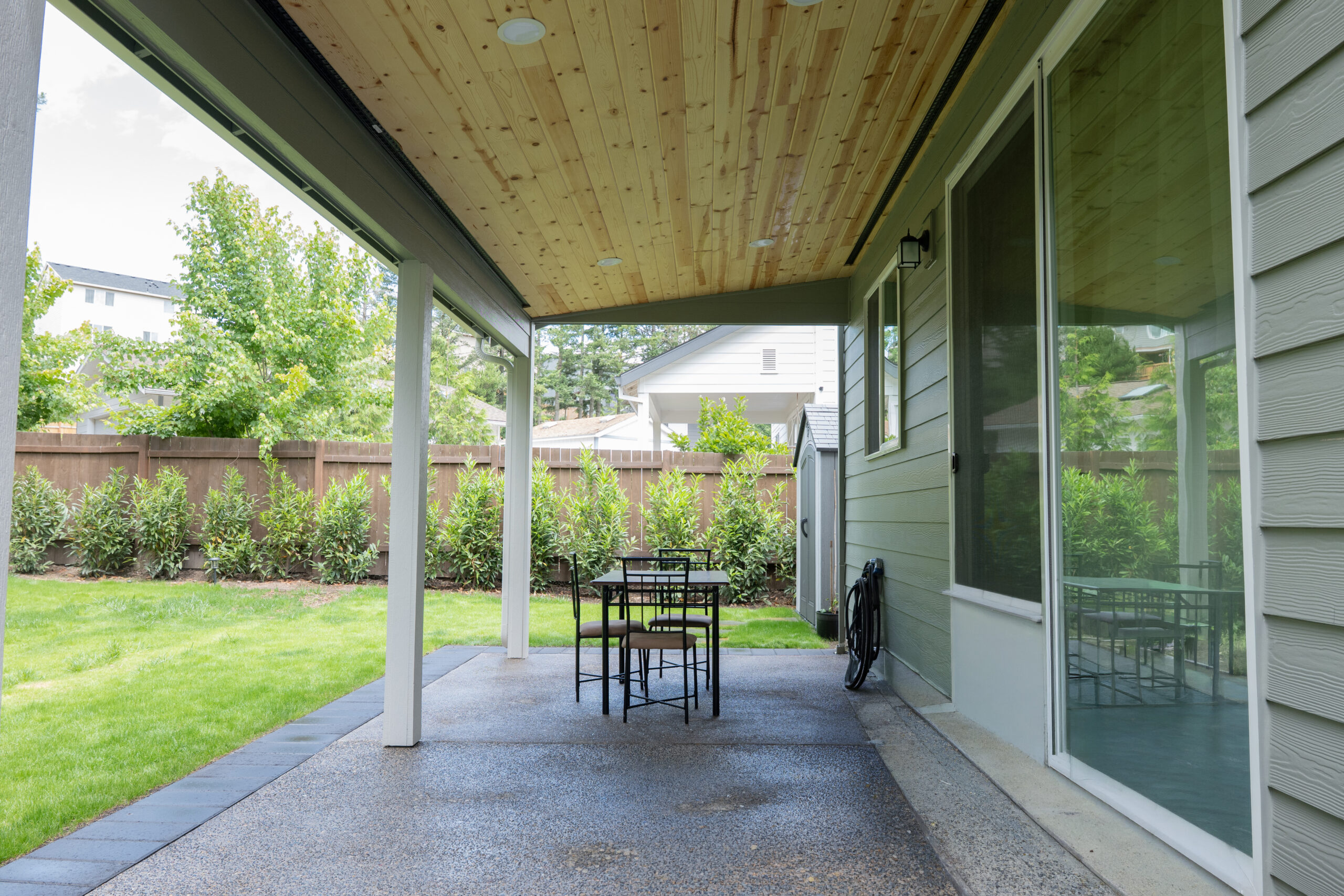
In Portland the answer is almost always the same: you need cover. An uncovered patio gets used maybe four months a year; a covered structure with lighting can stretch that to eight or nine. For this project we designed and built a cover structure attached to the back of the home, similar to a custom pergola but with a solid roof. One detail that mattered to the family: the structure had to match the architecture of the home, not look like an afterthought added on. We carried the rooflines, finishes and proportions through the new structure so it reads as part of the original build. We walked through similar approaches in 9 modern pergola ideas for Portland, Oregon homes.
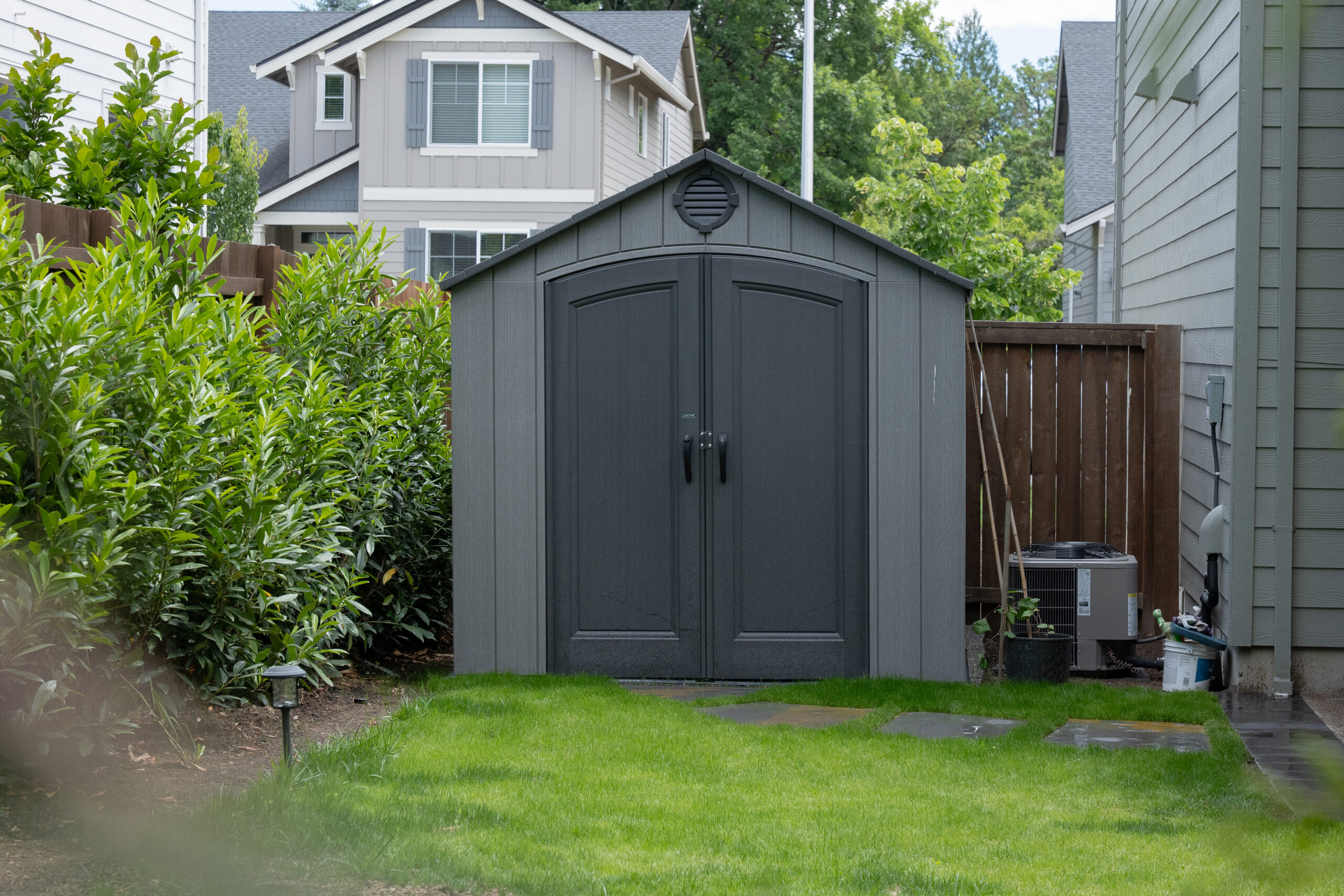
Beyond the cover structure, the family also wanted a shed for storage and outdoor utility space. We built it as part of the same project so the materials, rooflines and finishes stayed consistent across the whole back of the property.
A cover structure without lighting is a daytime feature only, so we integrated outdoor lighting directly into the underside of the roof, planned and wired during construction. That keeps the install clean, dimmable for different uses, and energy-efficient (per U.S. Department of Energy data, LEDs use at least 75% less energy than halogen). For a deeper dive, see our blog on the best outdoor lighting for homes in Portland, Oregon.
Connecting It All: Flagstone Walkway and Extended Patio
Once the cover structure and shed were planned, we needed a way to connect them visually and physically. We installed a flagstone walkway that starts on the side of the house, leads to the cover structure and continues out to the shed. It's the kind of detail that turns three separate features into a single, coherent outdoor space.
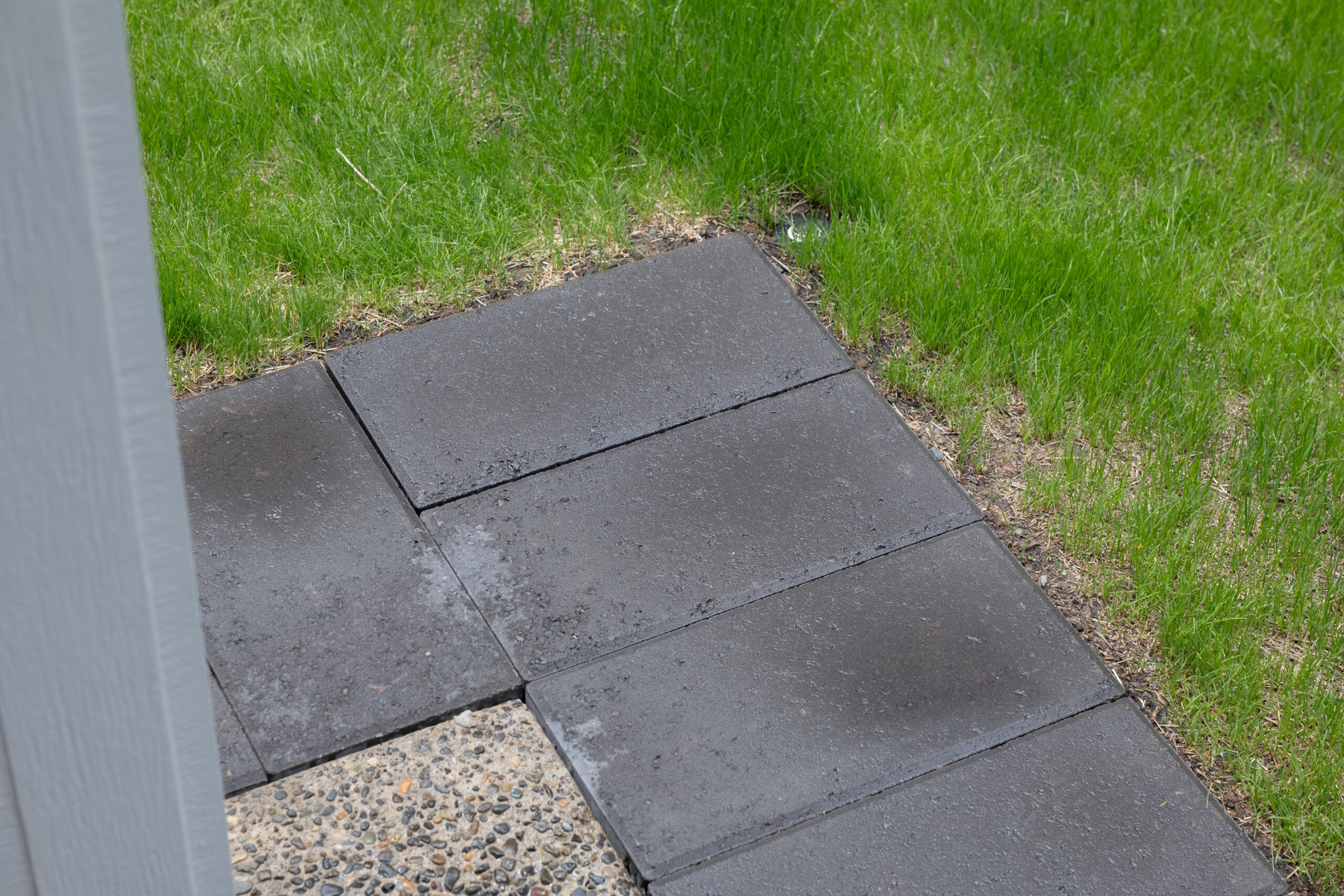
We also extended the existing concrete patio to match the footprint of the new cover structure. To give the patio a finished, intentional look and to gain a couple of extra inches of usable width, we added a charcoal paver border around the perimeter. The contrast between the lighter concrete center and the dark paver edge defines the space and makes the whole patio look designed rather than just enlarged. This is the kind of detail you get from working with a contractor who does both hardscaping and paver patio installs as part of the same project.
Problem 3: Open Exposure to Neighbors on a Small Lot
The third concern came up once the family started imagining how they'd actually use the new covered space. They didn't want to feel watched every time they were outside. Privacy was a real concern.
For privacy on a Portland lot, we generally have two options: build something or grow something. A solid fence works but can feel like a wall, especially on smaller lots. Hedging gives privacy with a softer, more natural look and doubles as a noise barrier.
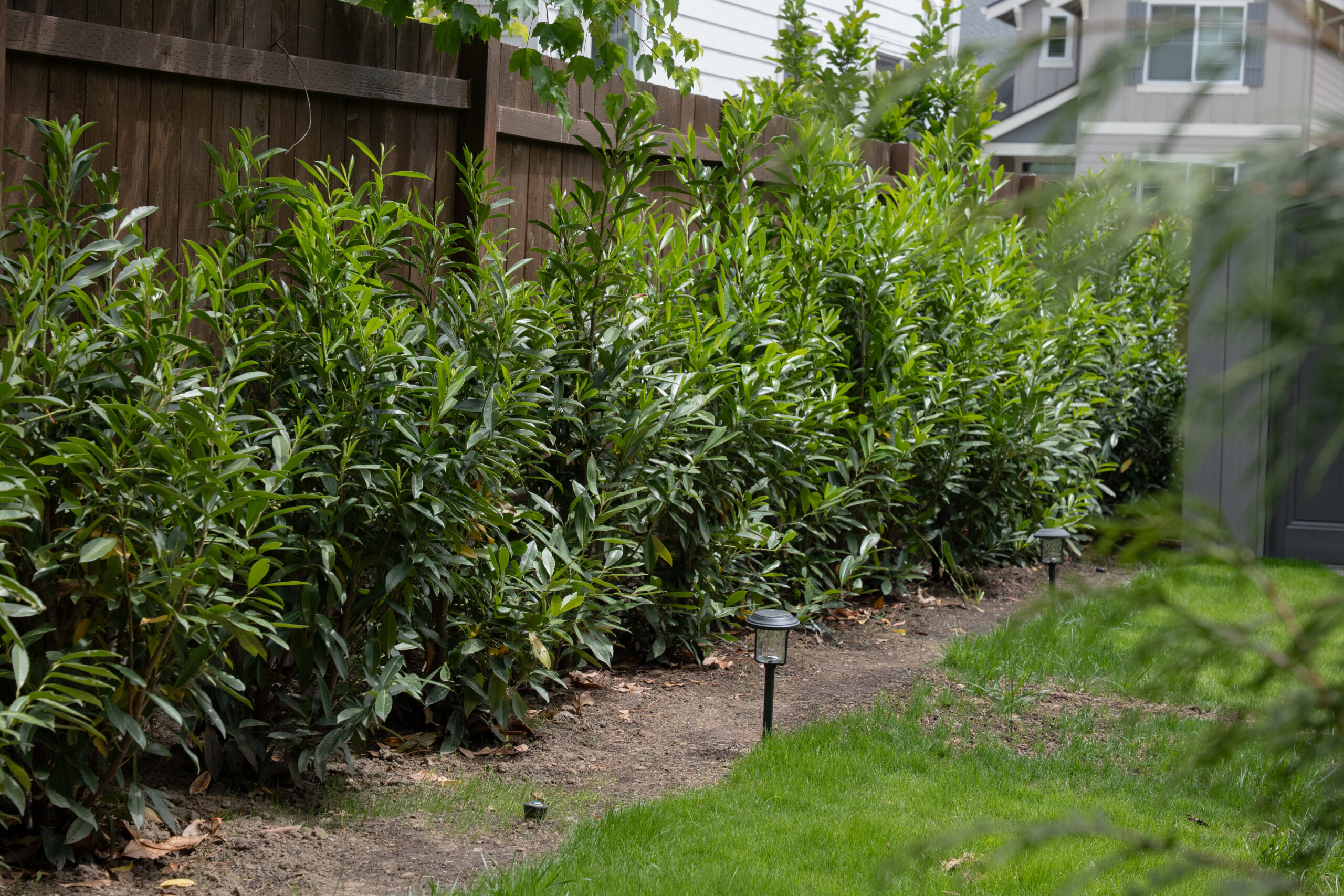
For this property, we planted a row of laurel hedges along the lot line. As the laurel matures, it'll create a natural barrier between the family and their neighbors, blocking sight lines without walling off the yard. Laurel is one of the workhorses of Portland privacy planting because it grows fast (often 2 to 3 feet per year once established), stays evergreen so privacy doesn't disappear in winter, tolerates pruning, and handles Portland's clay-heavy soils and wet winters without complaint.
The Oregon State University Extension Service has good resources on plant selection for hedging and privacy. For homeowners who want a quieter fence and screen combination, our fencing solutions for Portland page covers our approach to combining the two.
Tying It All Together: Reseeded Lawn
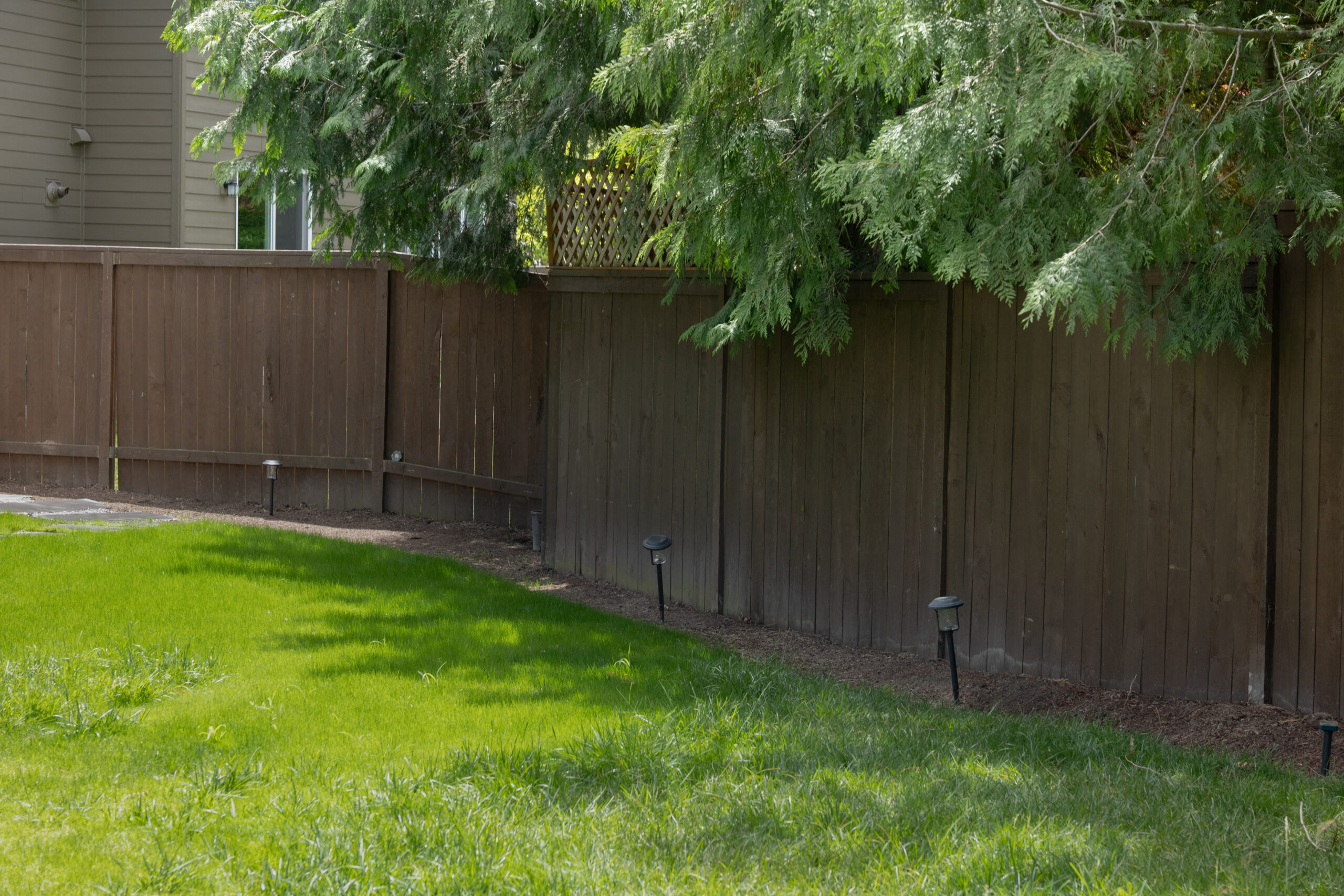
The final step on this project was reseeding the lawn. The drainage work, the patio extension, the structure foundations and the planting all required tearing into the yard at different points. None of that bothered us during construction because we knew the finish was going to put everything back together. Reseeded lawn around the new hardscape, integrated planting beds, fresh laurel hedge along the property line and a coherent flagstone walkway connecting it all.
This is the part most homeowners don't think about until it's done: a good project doesn't just install features, it puts the yard back together as a finished, unified space.
Why the Order of Work Mattered
The order we followed on this project, and the order we follow on almost every project:
- Drainage and grading first. Without this, everything else sits on a problem.
- Hardscape and structures second. Patio extension, cover structure, shed, flagstone walkway.
- Lighting and electrical third. Easier to run wiring before plants are in the way.
- Planting last. Laurel hedges and reseeded lawn went in once everything else was done.
A well-designed 3D outdoor design helps clients see this sequencing visually before any work begins.
What This Project Tells You About Portland Backyards in General
This project is a good summary of what most Portland homes need to become truly livable yards. The lessons are broadly applicable:
- New construction does not guarantee good drainage. Builders grade lots for the house foundation, not for the yard.
- Uncovered outdoor space is summer-only. If you want to use your yard 8 or 9 months a year, you need cover.
- Integrated structures should match the home, not fight it. A cover structure that carries the rooflines and finishes of the house reads as part of the build, not an addition.
- Privacy planting beats walls on most lots. Laurel hedges, cedar slat screens or layered planting feel more natural than a 6-foot fence.
- The finish matters as much as the build. A reseeded lawn, integrated walkway and clean transitions are what turn a construction site into a yard.
FAQ's
1. Why does a brand new home in Portland need drainage work?
Builders grade new construction lots for the house foundation, not for the surrounding yard. Once the home is built, the yard often sits at a grade that pools water rather than drains it. In Portland's climate (around 40 inches of rain per year), this becomes obvious the first wet winter. Drainage work is one of the most common services we provide on new construction homes in the Portland metro.
2. Can a cover structure be designed to match the architecture of the home?
Yes, and on most projects it should be. Matching rooflines, finishes, trim details and proportions makes the structure read as part of the original house rather than an addition. This takes more design and planning time upfront, but the visual result is worth it on any home where the cover structure will be visible from inside the home or the street.
3. How fast do laurel hedges grow in Portland, OR?
Established laurel hedges typically grow 2 to 3 feet per year in Portland's climate, which means you can expect a usable privacy screen within 2 to 3 years of planting, assuming proper care.
4. Should I do drainage work before or after a patio install?
Always before. A patio installed over a drainage problem will trap water, heave, crack and ultimately have to be torn out. The City of Portland Bureau of Environmental Services offers free residential drainage consultations, which we recommend taking advantage of early in the planning process.
Ready to Plan Your Own Portland Backyard Project?
The order matters. Drainage first, structures second, lighting third, planting and lawn finish last. If you're thinking about a project like this one, Golden Eagle Hardscapes offers free on-site consultations across Portland, Gresham, Troutdale, Boring, Damascus, Happy Valley, Lake Oswego, Milwaukie and Clackamas. We'll walk your yard, identify what needs to happen in what sequence, and give you a realistic plan. Request a quote on our website.