

Practical Ideas for Creating a More Functional Yard
A successful landscape should do more than improve the appearance of a property. It should create comfortable places to gather, support healthy plant growth, manage seasonal rain, and make the yard easier to use throughout the year.
When I evaluate a property, I first look at how the outdoor space currently functions. I pay attention to drainage, soil, sunlight, slopes, access, existing plants, and how the homeowner wants to use the yard. Those details help determine where planting areas, pathways, patios, shade structures, and gathering spaces should go.
Portland properties often experience wet winters, comparatively dry summers, shaded areas, slopes, and clay-heavy soil. Because of these conditions, the strongest landscaping designs are created around the property itself instead of being copied directly from a general inspiration photo.
Here are 10 landscaping design ideas that can help Portland homeowners create a more functional, inviting, and cohesive outdoor space.
1. Divide the Yard Into Functional Outdoor Areas
A yard often feels more organized when it is divided into areas with clear purposes. Instead of treating the property as one open surface, the design can include:
- A dining patio
- A quiet seating area
- An open lawn
- Fire pits
- Garden beds
- A fire feature
- A pathway connecting each area
Changes in paving, planting, elevation, lighting, or materials can help define each space without making the yard feel crowded.
For properties with slopes, professionally constructed retaining walls can create flatter, more usable levels while helping organize planting beds, seating areas, and circulation.
If the project includes several outdoor features, a 3D landscape design can help homeowners understand how the spaces will connect before construction begins.
2. Balance Landscaping and Hardscaping
Plants and built features should feel like parts of the same design. Landscaping brings color, texture, softness, and seasonal change, while hardscaping provides structure, durability, and usable surfaces.
Some balanced combinations include:
- Ornamental grasses beside a paver walkway
- Ferns around a shaded patio
- Groundcovers near stepping stones
- Flowering shrubs around a seating area
- Planting beds beside retaining walls
- Container plants near an outdoor cooking area
The goal is not to cover the entire yard with plants or stone. Leaving enough space between elements makes the landscape easier to maintain and allows each feature to stand out.
A coordinated landscape design and installation can help ensure patios, paths, planting beds, walls, and outdoor structures all feel connected.
3. Plan for Portland Rain and Drainage
Drainage should be considered before patios, planting beds, lawns, or pathways are installed.
During Portland’s rainy months, water may collect in low areas, move down slopes, or run off roofs and paved surfaces. Depending on the property, the landscape may need:
- Proper grading
- Drainage channels
- Permeable surfaces
- Dry creek beds
- Rain gardens
- Plants suited to wetter soil
- Safe overflow routes away from structures
The City of Portland’s residential rain garden guidance explains that rain gardens are shallow landscaped areas that collect runoff and allow water to soak into suitable soil. The city recommends evaluating soil infiltration, slope, underground utilities, overflow routes, and proximity to buildings before installing one.
Not every wet area requires a rain garden. The right solution depends on the source of the runoff, soil conditions, slope, and nearby structures.
Drainage planning should also be coordinated with paver patios, retaining walls, planting beds, and other hardscape features so water is directed safely away from the home.
4. Design a Patio That Connects With the Landscape
A patio should feel like part of the overall yard rather than an isolated surface placed behind the house.
Its size, shape, location, materials, and paving pattern should connect naturally with the architecture of the home, garden beds, walkways, and outdoor gathering areas.
A cohesive patio design may include:
- Planting beds around the perimeter
- Direct access from the kitchen
- Enough room for furniture and circulation
- A pathway into the garden
- Nearby shade
- Integrated seating or lighting
Professional paver patio installation allows homeowners to choose materials such as concrete pavers, brick, or natural stone based on the property’s style and expected use.
Pavers can also be used for walkways and transitions, helping the patio connect visually with other areas of the landscape.
5. Add Shade Where It Will Be Most Useful
Portland is known for rainy weather, but exposed patios can still become uncomfortable during warm summer afternoons.
Shade should be planned according to the property’s orientation, sun exposure, and the times of day the outdoor area will be used.
Shade can be created with:
- Deciduous trees
- Layered planting
- Covered seating areas
- Climbing plants
- Retractable shade systems
- Custom pergolas
A professionally designed pergola can define an outdoor room while providing partial shade, airflow, and a structure for vines, hanging plants, or lighting.
The dimensions and materials should complement the home so the pergola feels integrated into the landscape rather than added as a separate feature.
6. Create Privacy With Plants and Fencing
Privacy does not always require a single tall wall or a dense row of identical shrubs.
A layered planting design can create a softer screen using:
- Evergreen shrubs or trees in the background
- Medium-height flowering shrubs
- Ornamental grasses
- Perennials and groundcovers
- Strategically placed small trees
Before choosing plants, consider their mature height and width. Plants installed too closely together may become overcrowded, while slow-growing species may take several years to provide meaningful screening.
Where planting alone does not provide enough privacy or security, professional fence installation can be incorporated into the landscape.
Plants placed near the fence can soften its appearance and help it feel like part of the overall design.
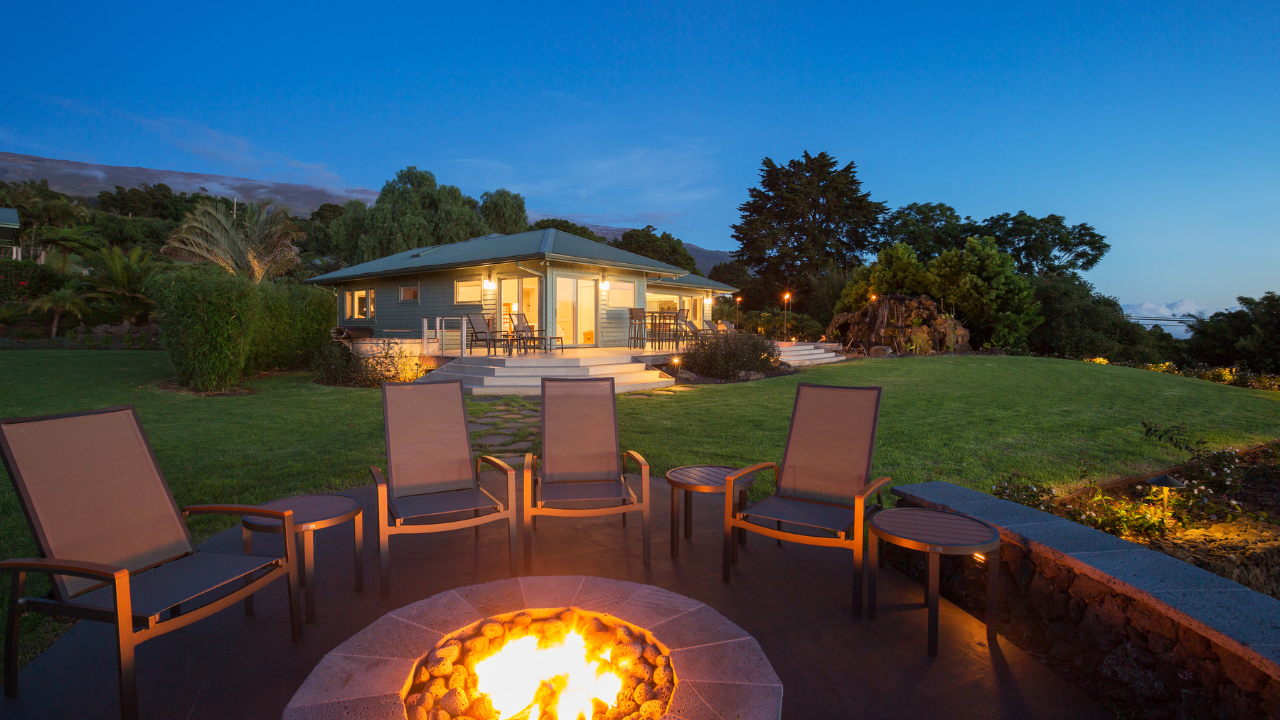
7. Build a Comfortable Fire-Pit Gathering Area
A fire feature can become a natural gathering point when the surrounding area is planned as a complete space.
Rather than placing a portable fire bowl in an unused corner, consider the seating, circulation, surface materials, lighting, and relationship to the main patio.
A complete fire-pit area may include:
- A circular or rectangular paved surface
- Built-in or movable seating
- Durable materials around the fire zone
- Low-voltage landscape lighting
- Planting placed outside the immediate fire area
- A clear walkway back to the home
Professional fire-pit and BBQ installation can help integrate the feature into the yard instead of making it look disconnected from the rest of the landscape.
For homeowners who enjoy cooking and entertaining outside, the fire-pit area can also be coordinated with an outdoor kitchen or BBQ space.
8. Use Outdoor Lighting With a Clear Purpose
Outdoor lighting should make the landscape safer and more enjoyable without making the property feel overly bright.
A layered lighting plan may include:
- Path lights along walkways
- Step lights near elevation changes
- Downlighting from trees or pergolas
- Accent lights around specimen plants
- Subtle patio lighting
- Task lighting near cooking areas
Professional outdoor lighting installation can highlight important landscape features while making pathways, stairs, patios, and gathering spaces easier to use after sunset.
Fixtures should be positioned carefully to reduce glare and avoid shining directly into windows or neighboring properties.
9. Choose Plants for Sunlight, Soil, and Maintenance
Plant selection should be based on actual site conditions, not only on appearance.
Before creating a planting plan, evaluate:
- Full-sun and shaded areas
- Seasonal changes in sunlight
- Soil texture
- Drainage
- Wind exposure
- Mature plant size
- Irrigation requirements
- The homeowner’s preferred maintenance level
A shaded backyard may need ferns, evergreen groundcovers, and other shade-tolerant plants, while a sunny area may support ornamental grasses, flowering shrubs, and drought-tolerant species.
Homeowners can also review Golden Eagle’s local guide to landscaping in Portland for more information about planting zones, climate-adapted plants, drainage, and local site planning.
Even plants that need less water once established may require regular watering during their first growing seasons. An efficiently designed irrigation system can help deliver water where it is needed without treating every part of the yard the same way.
10. Connect the Landscape With Clear Pathways
Pathways guide movement and help different areas of the property feel connected.
They may lead from:
- The driveway to the front entrance
- The home to the patio
- The patio to the fire-pit area
- The side yard to the backyard
- A seating area to the garden
- One landscape level to another
The material should be selected according to how often the path will be used.
Pavers work well for primary circulation routes, natural stone can create a more organic garden path, and gravel may be appropriate for informal or low-traffic areas.
Pathways should be wide enough for their intended use and should avoid abrupt turns or unnecessary obstacles. Planting can soften the edges, while outdoor lighting can make the route safer at night.
FAQ's
1. How long does a landscaping project take in Portland?
Timelines vary based on project size, drainage needs, materials, weather, and site conditions.
2. What should I consider when designing a Portland backyard?
Consider drainage, soil, sunlight, slope, privacy, maintenance, and how you plan to use the space.
3. Can these landscaping ideas work in a small backyard?
Yes. Careful layouts, vertical planting, lighting, and multifunctional features can make small yards more practical.
4. How can I create more privacy in my backyard?
Use layered plants, trees, screens, pergolas, or professional fencing.
5. Should landscaping and hardscaping be planned together?
Yes. Planning both together improves drainage, circulation, functionality, and the overall appearance of the yard.
Ready to Plan Your Portland Landscape?
A well-designed landscape should feel natural, function throughout the year, and reflect how you want to use your property.
Golden Eagle Hardscapes provides professional landscaping and hardscaping services in Portland, Oregon, including landscape installation, paver patios, retaining walls, pergolas, fire features, irrigation, outdoor lighting, fencing, water features, and 3D design.
Contact Golden Eagle Hardscapes to schedule a consultation and begin planning an outdoor space designed around your home, property, and lifestyle.